Camping guides
The 9 brilliant ways Aussie campers are beating the bowser
)
"Just quietly: we may be entering one of the BEST times to book a camping getaway in years."
Queensland is a sparkling dream of sun & 24-degree water. New South Wales is firing on every front — clean autumn surf, prime campfire season inland, hiking at its best. Victoria and Tasmania are turning gold with autumn, wineries and mountain drives at their scenic best. South Australia and WA have swapped 40-degree afternoons for crisp, clear mornings.
Plus: everywhere you look, the crowds have packed up and gone home. Fuel prices have done what no national park booking system ever could — cleared the place out. Lucky us.
Campgrounds feel bigger. Caravan parks feel calmer. And the deals are stacking up — holiday parks and van hire rates are the cheapest they've been all year, which totally offsets what it costs to get there.
The one catch, of course, is fuel. It's not cheap, and that's changed how people are thinking about camping this season. The good news: there are smart ways to have a brilliant getaway without pumping half the budget into the tank.
TL;DR
Explore your incredible backyard. You live 2hrs from the worlds best campsites.
Skip the tow. Have a caravan delivered and drive your own fuel-efficient car to the site.
Catch the train. Public transport is free across Victoria until 30 April — pair it with a local owner delivering the van for zero-fuel camping.
Pick the right van. Small campers use 8–11 L/100km; a 4WD towing a big van can hit 24. The gap is enormous.
Match fuel to trip. Petrol for short weekends in small vans; diesel for long hauls and towing. You can now filter Camplify by fuel type.
Stay longer, move less. One good basecamp beats four overnight stops.
Split the bill. Four adults in one van = cheapest per-head holiday going.
Stack the discounts. Campground networks, holiday parks and van hire are all running their best off-season rates of the year — offsetting the fuel bill nicely.
Use a fuel app. Fill up off the highway and save 20–30c a litre.
The 9 hacks to stop feeding the servo next camping trip
Reminder: You live 2hrs from the best campgrounds in the world.
)
Reflections Seal Rocks: three hours from Sydney, half the price in the off-season, and not a queue in sight.
Australia is the envy of the world. People fly halfway across the globe to get a taste of our incredible outdoors — and we're lucky enough to have some of the most spectacular camping on the planet sitting right in our backyard. It's so easy to forget when you're caught up in the everyday grind, but it's time to rekindle that love. Remember getting among it during COVID? It's just like that — except without the crowds, the booking wars, or the two-hour queue for the camp kitchen.
Book a few nights at your favourite local spot and let the noise of the week feel a million miles away. From Sydney, the Hunter Valley, the Central Coast and the Blue Mountains are all under two hours. From Melbourne, the Mornington Peninsula and the Macedon Ranges are practically next door. From Brisbane, the Scenic Rim and the Sunshine Coast Hinterland are within easy reach. Up north, you've got the Atherton Tablelands from Cairns. Out west, Dwellingup and the Darling Range from Perth.
A shorter drive doesn't mean a lesser trip. It means less money getting there and more time actually being there — longer walks, a second glass of wine with dinner, a slow morning past seven. The spots that feel almost too familiar to bother visiting are usually the ones most worth exploring properly.
Have the caravan delivered — don't tow at all
)
Imagine arriving at your campsite and finding a luxury caravan set up and waiting. That's caravan delivery. Half the fuel, double the comfort.
This is the option most people don't realise they have, and it may be the single biggest fuel saver on the list. Plenty of Camplify caravan owners now offer delivery straight to your caravan park. You drive your regular, sensible, fuel-efficient car to the destination. The van is set up, levelled, awning out, and waiting when you arrive. No tow vehicle, no white-knuckle reversing, no 20 L/100km blowout.
The economics land pretty hard when you run the numbers. A 4WD towing a big twin-axle caravan chews through roughly 18–24 L/100km. A regular family hatchback or mid-size SUV on its own? Closer to 6–8. On a 400 km round trip, that's the difference between an $80 fuel bill and a $200+ one — even before you've factored in the cost of the tow vehicle itself.
Browse vans with delivery available and filter to your campground. If there's an owner nearby, the delivery fee is usually modest because they're barely driving — which is kind of the whole point.
The ultimate no-drive getaway: catch the train there
)
Even better: don't drive at all. Free public transport across Victoria + train-accessible campgrounds everywhere means you don't need to spend a cent on fuel.
If you're in Victoria, this is a genuinely unique moment. The state government has made all trains, trams and buses — including V/Line regional services — free until the end of April. Not discounted. Free. That opens up Geelong and the Bellarine, Halls Gap and the Grampians, the Goldfields towns, and even French Island (train to Stony Point, ferry across) as zero-fare destinations. Pair that with a local Camplify owner delivering a van to your campsite, and your fuel bill to get away for the weekend is, quite literally, nothing. We've written a full Victoria guide with the best train-accessible spots and where to camp.
In New South Wales, fares aren't free but the network still lines up surprisingly well with some great camping. Sydney to Newcastle, Sydney to Kiama, and Sydney up to Katoomba and the Blue Mountains are all comfortably under three hours by rail, and there are strong clusters of owners at each end offering delivery. We've mapped the best car-free camping options in NSW here.
The principle holds everywhere: if a train gets you close, and a local owner delivers the last few kilometres, you've built a camping trip with essentially no fuel footprint. And — small but underrated bonus — you can have a wine on the train. Try doing that while towing.
Choose the right van for the job
If you are driving, the single biggest variable in your fuel bill is what you're driving. Small campervans and motorhomes are dramatically more economical than large ones, and the difference between a HiAce pop-top and a 4WD towing a big caravan is the difference between a cheap weekend and an expensive one.
Here's a rough real-world guide to what different RV types actually use, based on highway driving on normal terrain. Figures vary with load, wind, and how heavy a right foot you have, but the bands are reliable:
RV type | Rough economy |
|---|---|
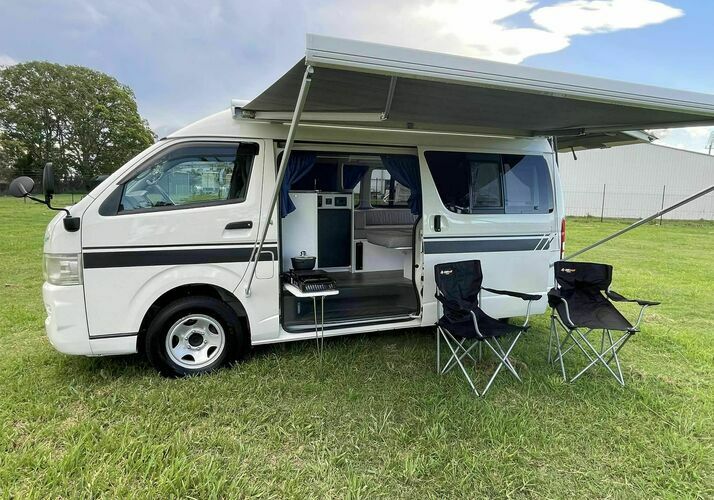
Small campervan (HiAce, Transit Custom, VW T6 pop-top) | 8–11 L/100km |
Mid-size motorhome (Fiat Ducato, Mercedes Sprinter) | 12–16 L/100km |
Large A-class motorhome | 16–20 L/100km |
Mid-size SUV towing a small single-axle van (14–16 ft) | 13–16 L/100km |
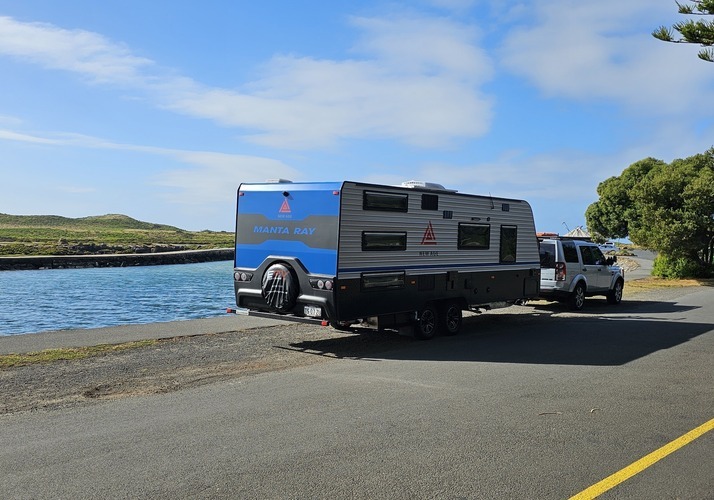
4WD towing a large twin-axle van (20 ft+) | 18–24 L/100km |
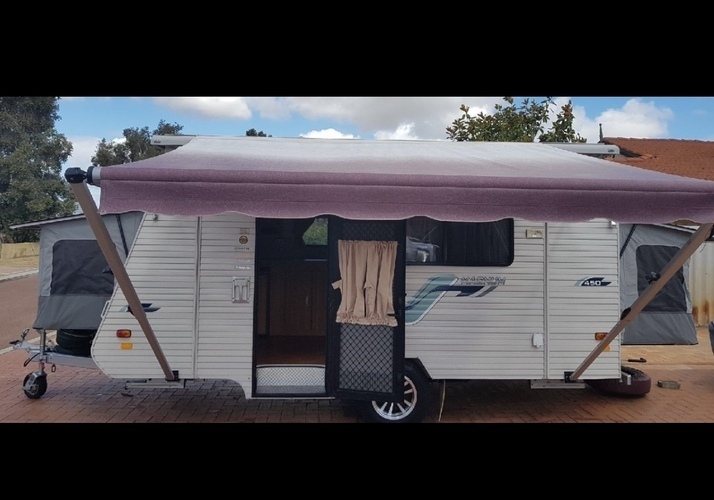
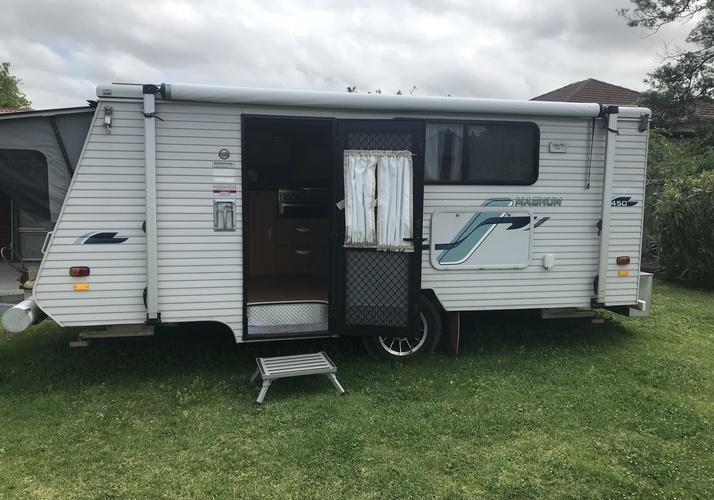
When you're browsing, look for smaller 2–4 berth vans built on common delivery-van platforms. If you're set on a caravan, size matters: a lighter single-axle van in the 14–16 foot range makes a noticeable difference to fuel consumption compared to a big twin-axle rig. And if you're towing with your own vehicle, search for vans that sit comfortably inside your tow capacity — pulling at or near your limit burns dramatically more fuel than towing well within it.
Petrol or diesel? Match the fuel to the trip
)
Fuel type matters more than most people realise, and the right answer depends entirely on the trip.
Petrol engines are cheaper at the bowser and genuinely well suited to shorter trips in smaller campers — most HiAce and Transit Custom pop-tops on the platform run on petrol, and for a weekend three hours from home, that's the most economical combination you can book.
Diesel earns its keep on longer highway runs and heavier rigs. Most Ducato and Sprinter-based motorhomes are diesel, as are almost all tow vehicles, because the better litres-per-100km figures start to outweigh the price-per-litre premium once you're doing real distance. A rough rule of thumb: weekend in a small van, petrol's your friend. Two weeks up the coast in a motorhome, or anything involving towing, diesel usually pays for itself.
You can now filter Camplify search results by fuel type — along with vehicle model — so you can pick the engine that suits your trip before you book. It's a small thing that makes a real difference.
Stay longer, move less
)
When your campsite looks like this: you'll never be in a hurry.
One of the quietly brilliant things about the off-season is how easy it is to book longer stays in the spots you actually want to be in. And four nights parked in one good campground will always beat four one-nighters in four different ones — less fuel, more firewood, better photos, deeper sleep, and no packing the van down every morning.
It's also the kind of trip that suits an RV better than anywhere else. Set up once. Unpack properly. Let the kids wear the same pair of shorts for three days running. Day-trip from a basecamp in your regular car if you've driven one, or walk from the van if you've had it delivered. The quiet season rewards people who slow down.
Travel with mates and split the cost
)
What's better than a camping getaway? Simple: a camping getaway + four of your best mates. It's funner & cheaper.
Four adults in a six-berth van splits the fuel bill four ways. It also splits the van hire, the site fee, the groceries, and the firewood. What feels like an expensive solo weekend becomes the cheapest per-head holiday going the second you add a few more people.
It's worth browsing with that in mind. A larger van hired across a group almost always works out cheaper per person than two smaller vans — and the social side of a shared campfire probably doesn't need selling.
Stack the discounts — they're the best they've been all year
)
It's all smiles when there's discounts at every turn.
The best-kept secret of the quiet season isn't the weather or the empty campgrounds — it's what's happening on price. With the summer rush over, just about every major campground network in the country is running significant off-season deals, and stacked together they go a long way toward offsetting whatever you're spending on fuel.
A quick snapshot of what's live right now:
Camplify — $100 off your next booking with code ROADTRIP100 (valid until May 1). Stacks on top of owner off-season rates.
BIG4 Holiday Parks — up to 30% off for stays of 3+ nights at select parks, running through to June. 306 parks to choose from.
Reflections Holidays — stay 4 nights, pay for 3 at Bermagui, Bonny Hills, Eden and Coffs Harbour. 15% off midweek stays of 3+ nights; 10% off stays of 7+.
Discovery Holiday Parks — $20 powered sites, stay 4 pay 3, and plenty more depending on the state.
Ingenia Holidays — 20% off for stays of 4+ nights across all parks nationwide.
NRMA Parks & Resorts — up to 25% off midweek and 15% off weekends, with an extra 5% for My NRMA Rewards members.
The full list of live deals is on the quiet season hub. Five minutes of browsing before you book and you'll often find the discounts cover most — sometimes all — of what the drive was going to cost you.
Use a fuel app — and fill up off the highway
The last one is the simplest, and probably the most overlooked. Highway service stations routinely charge 20–30c a litre more than a servo five minutes off the same exit. On a 70-litre fill, that's $15–$20 straight back in your pocket for the cost of a small detour.
Use a fuel app to find the cheapest pump near you — FuelCheck in New South Wales is run by the state government and genuinely excellent, and Fuel Map Australia works nationally. Five minutes of planning before you leave the house, and you'll save more across a trip than most of the other tips on this list.
View all vans
400+ RVs availableThe information in this blog is accurate and current as of the date of posting. Please be aware that information, facts, and links may become outdated over time.