Destinations
The ultimate guide to stargazing in the Warrumbungles: Experience Australia's Dark Sky Park
)
"Being under that sky humbles you. When you're looking at stars that are 12 billion years old, the numbers are so ridiculous that they put everything in perspective. And that experience is what it's all about." - Donna Burton (Australian Astronomer)
If you've ever looked up at the night sky from a city and felt vaguely cheated (a handful of faint dots where there should be thousands), then the Warrumbungles are about to change your life.
Warrumbungle National Park is home to Australia's only Dark Sky Park, and one of the most spectacular stargazing destinations on Earth. Away from the light pollution of Sydney, Brisbane and beyond, the night sky here isn't just visible — it's overwhelming. The kind of overwhelming where you stop mid-sentence and forget what you were saying.
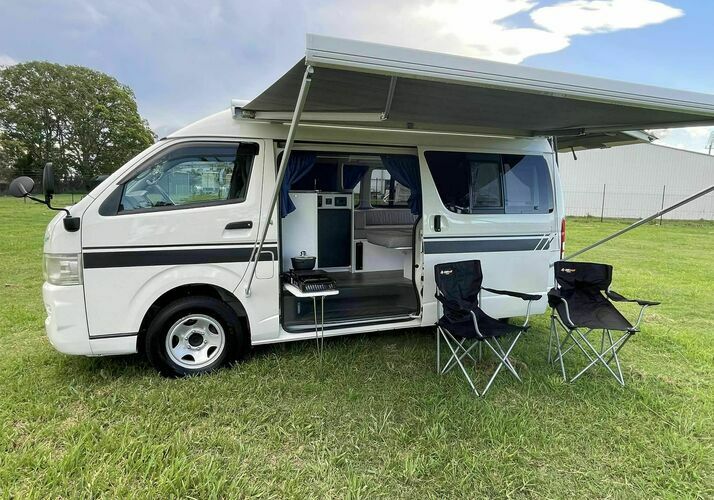
And the best way to experience it? Hire a caravan, campervan or motorhome from Australia’s largest van-sharing platform, Camplify, roll into the park or one of the best campsites near Coonabarabran, and let the universe do the rest.
This guide covers everything you need to plan the perfect winter stargazing trip to the Warrumbungles — from when to go and what you'll see, to the best campsites, things to do in Coonabarabran by day, and how to get the most out of hiring a van on Camplify.
TL;DR
Winter (June–August) is peak season: longer nights, clearer skies, and the Milky Way at its most spectacular
Time your visit around a new moon: the three-to-five nights after a new moon offer the darkest, most star-filled skies of the month
Stay inside the national park for the best experience: with a hired caravan, campervan or motorhome from Camplify, the darkest skies in Australia are right outside your door
Camp Wambelong and Camp Blackman are the top campsites inside the park — both fill fast on winter weekends, so book early
Don't write off the daytime: hike the Grand High Tops, explore Siding Spring Observatory, and discover the charm of Coonabarabran town
Bring: Binoculars, a red light torch, warm layers, and download the Stellarium app before you leave
Why the Warrumbungles are Australia's stargazing Capital
The Warrumbungles region, centred around the town of Coonabarabran in central-western NSW, was officially designated Australia's first Dark Sky Park in 2016. It's not an honorary title — it's the result of strict light pollution regulations enforced within a 200km radius of the park, making it one of the darkest accessible locations in the entire southern hemisphere.
The conditions here are genuinely exceptional:
High altitude and low humidity create outstanding atmospheric clarity
No nearby major cities — Coonabarabran sits roughly 460km from Sydney and 540km from Brisbane
Light pollution controls are enforced across the region by local council policy
60+ years of astronomical research has been conducted here, anchored by the internationally renowned Siding Spring Observatory
On a clear night in the Warrumbungles, it's possible to see 6,000 to 7,000 individual stars with the naked eye. For context, from central Sydney on a good night, you might spot 100.
Getting there: Driving to Coonabarabran and the Warrumbungles
From Sydney: Approx. 6 hours / 480 km on the Newell Highway via Dubbo.
From Brisbane: Approx. 7 hours / 600km on the Carnarvon Highway via Moree.
From Melbourne: Approx. 9.5 hours / 830km on the Hume + Newell Highways via Wagga Wagga.
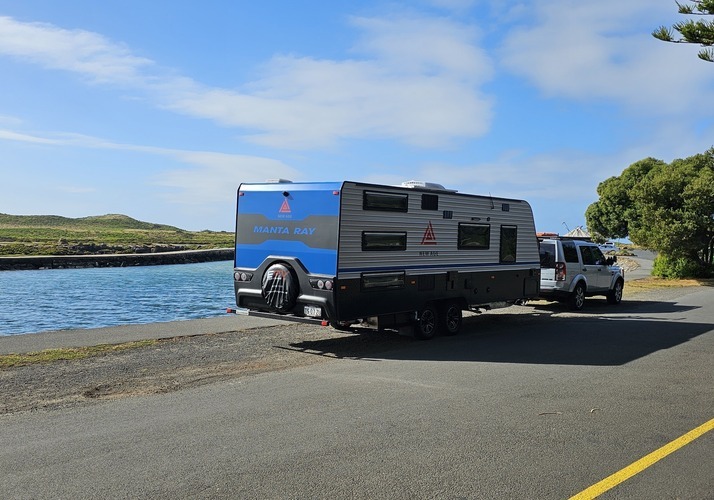
The Newell Highway is well-maintained and suitable for caravans, campervans and motorhomes. Fill up with fuel in Coonabarabran before heading into the national park as there are no facilities inside. Roads within Warrumbungle National Park are sealed but narrow in places; campervans and smaller motorhomes navigate them comfortably.
 Find vans from Sydney, Brisbane and Melbourne or pick up your van in Coonabarabran.
Why hiring an RV is the best way to experience the Warrumbungles
Hiring an RV on Camplify and parking up at Camp Wambelong or Camp Blackman means you're not commuting to the dark sky — you're already there. Step outside at 10pm, 1am, or 4am; the sky is there whenever you are, with no pressure to call it a night. When you're ready to warm up, a properly heated campervan or motorhome is right behind you. Many RVs on Camplify have skylights so you can fall asleep watching the stars from inside.
By day, your van is a fully self-contained base for hiking, wildlife watching and exploring at your own pace. And split across a family or group, the per-person cost often beats a motel (with far more freedom).
When is the best time to go stargazing in the Warrumbungles?
You can stargaze in Warrumbungle National Park year-round — but winter is the standout season, and here's why it matters for your planning:
Winter is peak stargazing season
Australia's winter months (June–August) bring some of the clearest, driest nights of the year to central NSW. Lower humidity means less atmospheric distortion, and the Milky Way's dense galactic core sits high and bright in the winter sky — a truly spectacular sight from a genuinely dark site.
Winter nights are also long. Darkness falls earlier, giving you more hours of prime viewing time without having to stay up until midnight.
 Read more about exploring the Warrumbungles.
Time your trip around the moon
The single biggest variable in stargazing quality - more than season, more than weather - is the moon phase. A full moon washes out thousands of stars and dramatically reduces what's visible.
The sweet spot: Aim for the three-to-five nights immediately after a new moon, or the week leading up to one. During this window, the moon is absent from the sky for most of the night, leaving maximum darkness.
Check a lunar calendar when you're planning dates — this one detail can transform a great stargazing trip into an extraordinary one.
Best months for specific sights
Month | What's Visible |
|---|---|
May–August | Milky Way galactic core at its finest, Scorpius, Centaurus |
June–July | Jupiter and Saturn often prominent in the evening sky |
October–February | Magellanic Clouds — two satellite galaxies visible to the naked eye |
Year-round | Southern Cross, Eta Carinae Nebula, Omega Centauri globular cluster |
What you’ll actually see
The southern hemisphere has a genuine advantage over the north for night sky viewing - you're facing towards the galactic centre of the Milky Way, where stars are densest and nebulae most vivid. Here's what to look for from the Warrumbungles:
The Milky Way: In Warrumbungle National Park, the Milky Way isn't a faint smudge — it's a thick, luminous band stretching from horizon to horizon, dense with stars and dramatic dark dust lanes. In winter, the galactic core rises in the south-east and tracks overhead, offering views that rival the world's most celebrated dark sky destinations.
The Magellanic Clouds: These two dwarf galaxies — the Large and Small Magellanic Clouds — orbit our own Milky Way and are visible to the naked eye, but only from a truly dark site. You won't see them from any city or suburb in Australia. From the Warrumbungles, they appear as distinct cloud-like patches glowing in the southern sky.
Planets: Saturn, Jupiter, Mars and Venus all make appearances throughout the year, often startlingly bright. During favourable oppositions, Saturn's rings and Jupiter's moons can be resolved through a pair of basic binoculars.
Nebulae and clusters: The Eta Carinae Nebula, the Jewel Box cluster, and the globular cluster Omega Centauri are showpieces of the southern sky — all far more impressive from a dark site than anywhere near a city.
Stargazing experiences near the Warrumbungles and Coonabarabran

Milroy Observatory: The Dark Sky Show
One of the most loved stargazing experiences in the Warrumbungles is the Dark Sky Show at Milroy Observatory, led by Donna Burton (AKA: Donna The Astronomer) — Australia's only woman to have discovered two comets, and one of the country's most passionate astronomy communicators.
Donna runs interactive, all-ages tours beneath the Milky Way, followed by guided sessions on Milroy Observatory's 40" telescope — one of the largest publicly accessible telescopes in Australia. The show is famously hands-on, tailored to what the audience wants to explore, and just as engaging for curious adults as it is for kids.
The Dark Sky Show is ideal for families, first-timers, and anyone who wants an expert to help them make sense of what they're looking at. Book well in advance — sessions fill quickly in winter and school holiday periods.
Siding Spring Observatory
Siding Spring Observatory sits on the eastern edge of Warrumbungle National Park and is one of Australia's most important scientific research facilities, home to the Anglo-Australian Telescope and several international instruments. While the research telescopes are off-limits, the visitor centre and public programs offer a genuine window into how professional astronomy works, with panoramic views over the Warrumbungles as a bonus.
Skywatch Coonabarabran
Right in town, Skywatch Coonabarabran runs public viewing nights most clear evenings — a great option if you've just arrived, want to warm up your stargazing eyes, or are travelling with younger children who benefit from an experienced guide pointing things out in real time.
Self-guided stargazing from your campsite
You don't need a guide or a telescope for a profound experience. Park your hired van at one of the national park campgrounds, let your eyes adjust for 20 minutes, and look up. Use a free app like Stellarium or SkySafari to identify constellations and planets, and give yourself at least an hour — the longer you stay with the sky, the more you see. This is, honestly, the heart of the Warrumbungles experience.
Best places to stay: Campsites in and around the Warrumbungles
Tip: National park sites in the Warrumbungles — particularly at Camp Wambelong — fill weeks in advance during winter weekends around new moon phases. Check the NSW National Parks booking portal early.
) Step outside your campervan and look up to this - you couldn't get any closer to the action if you tried!
Step outside your campervan and look up to this - you couldn't get any closer to the action if you tried!
1. Camp Wambelong — Warrumbungle National Park
The most popular campground inside the national park, Camp Wambelong puts you well away from town lights with direct access to walking trails. Facilities include flushing toilets, BBQs and picnic areas.
Best for: Families, first-timers, those who want park facilities alongside dark skies
2. Camp Blackman — Warrumbungle National Park
A quieter, more basic site within Warrumbungle National Park. Camp Blackman is loved by repeat visitors for its peaceful atmosphere and the resident kangaroos that graze around the site at dusk and dawn. Limited facilities, maximum atmosphere.
Best for: Couples, experienced campers, those who want peace, dark skies and wildlife
3. Coonabarabran Caravan Park (Town Base Option)
If you're travelling with a larger motorhome or prefer a powered site with full facilities, staying in town at Coonabarabran Caravan park is a practical and comfortable base. It's just a 30-minute drive to the heart of Warrumbungle National Park, making it easy to head in for day hikes and return to town for the evening — or drive back into the park after dark for stargazing away from town lights.
Things to do in Coonabarabran and the Warrumbungles by Day
Great news: the Warrumbungles aren't just a night-time destination. There's genuinely excellent daytime activity here, which makes a van hire trip feel like a proper multi-day adventure rather than just a stargazing sleepover.
 A campervan offers you what a hotel can't - the ability to have the best stargazing spots right outside your door (literally).
Walk the Grand High Tops
The Grand High Tops walk is one of the best day hikes in NSW — a 14km return route through dramatic volcanic rock formations, rising to sweeping views across the Warrumbungles. The landscape of spires, ridges and ancient lava plugs is unlike anything else in Australia. Start early to beat the winter chill and give yourself a full day.
Explore Warrumbungle National Park's shorter walks
Not up for a full-day hike? The national park has several shorter trails suited to families and casual walkers. The Breadknife and Grand High Tops circuit can be split into sections, and the Whitegum Lookout walk (2km return) delivers big views for minimal effort.
Visit Siding Spring Observatory
Even if you're stargazing independently at night, the Siding Spring visitor experience is worth doing in daylight. The drive up through the park is beautiful, and the centre has engaging displays on Australian astronomical history.
Wildlife watching
The Warrumbungles are home to abundant wildlife — kangaroos and wallabies are a near-certainty at dusk around the campgrounds, wedge-tailed eagles soar the thermals by day, and the birdlife throughout the park is exceptional. Bring binoculars.
Explore Coonabarabran
Coonabarabran itself is a classic Australian country town with genuine warmth. Stock up at the local supermarket, grab breakfast at one of the town's cafes, visit the Crystal Kingdom (a genuinely impressive gem and fossil shop), or simply enjoy the slower pace before heading back into the park. The town also has a pub, a bakery, fuel, and all the essentials — everything you need to top up between camp days.
Day trip to Dunedoo
The small town of Dunedoo, about 90km south-east of Coonabarabran, makes a pleasant half-day excursion if you're spending several nights in the area. It's a classic NSW country town with a heritage streetscape, a bakery, and a relaxed atmosphere. Notably, Dunedoo Caravan Park is a well-regarded stopping point for travellers doing the central-west NSW loop — a good option if you're planning a longer road trip through the region and want a comfortable overnight base between destinations.
What to pack for a winter Stargazing trip
The good news? Hiring an RV through Camplify takes most of the packing stress off the table. Bedding and kitchen equipment are included as standard, and most owners throw in the extras (camp chairs, tables, outdoor mats) so you can focus on the experience rather than the logistics.
10x50 binoculars: The single best upgrade from naked-eye viewing. A wide aperture reveals star clusters, nebulae and the structure of the Milky Way without the complexity of a telescope.
Red torch: White light destroys your night vision (it takes 20–30 minutes to fully recover). Use red-light mode to preserve it.
Stellarium or SkySafari app: Free, accurate, and brilliant for identifying what you're looking at in real time
Camera and tripod (optional): A 20–30 second exposure at high ISO and wide aperture captures stunning Milky Way shots.
Thermals, fleece and puffer jacket: Temperatures in the Warrumbungles regularly fall close to zero on winter nights — dress for it
Sleeping bag rated to -5°C if you're sleeping outside or in a tent annexe
Thermos: Hot tea or coffee under the stars is one of life's better experiences
Find the perfect RV for your stargazing adventure
Search thousands of RVsFrequently asked questions
Do I need a telescope to stargaze in the Warrumbungles? No. The naked eye experience at Warrumbungle National Park is extraordinary on its own. A pair of 10x50 binoculars significantly enhances what you can see, but a telescope isn't necessary unless you want fine planetary detail or very faint deep-sky objects.
What are the best things to do in Coonabarabran? Beyond stargazing, the top things to do in Coonabarabran and surrounds include the Grand High Tops walk in Warrumbungle National Park, visiting Siding Spring Observatory, attending the Dark Sky Show at Milroy Observatory, wildlife watching at the campgrounds, and exploring the town itself — the Crystal Kingdom gem shop is genuinely worth a stop.
Is Warrumbungle National Park open year-round? Yes. The national park is open year-round. Winter (June–August) delivers the best stargazing conditions, though spring and autumn are also excellent. The visitor centre hours vary by season.
Can I take a hired caravan or motorhome into Warrumbungle National Park? Yes. Campervans and smaller motorhomes access the park campgrounds comfortably. Larger rigs should check road and site dimensions on the NSW National Parks website before travelling.
Is Dunedoo worth visiting from Coonabarabran? Dunedoo is a pleasant half-day side trip if you're spending several nights in the area — a classic NSW country town with a relaxed pace. Dunedoo Caravan Park is also a useful overnight stop for travellers on a longer central-west road trip.
What's the best stargazing app for beginners? Stellarium — free on iOS and Android. Point your phone at the sky and it identifies stars, planets, constellations and satellites in real time. SkySafari is excellent for those who want more depth as their interest grows.
More road trip inspiration:
The information in this blog is accurate and current as of the date of posting. Please be aware that information, facts, and links may become outdated over time.